

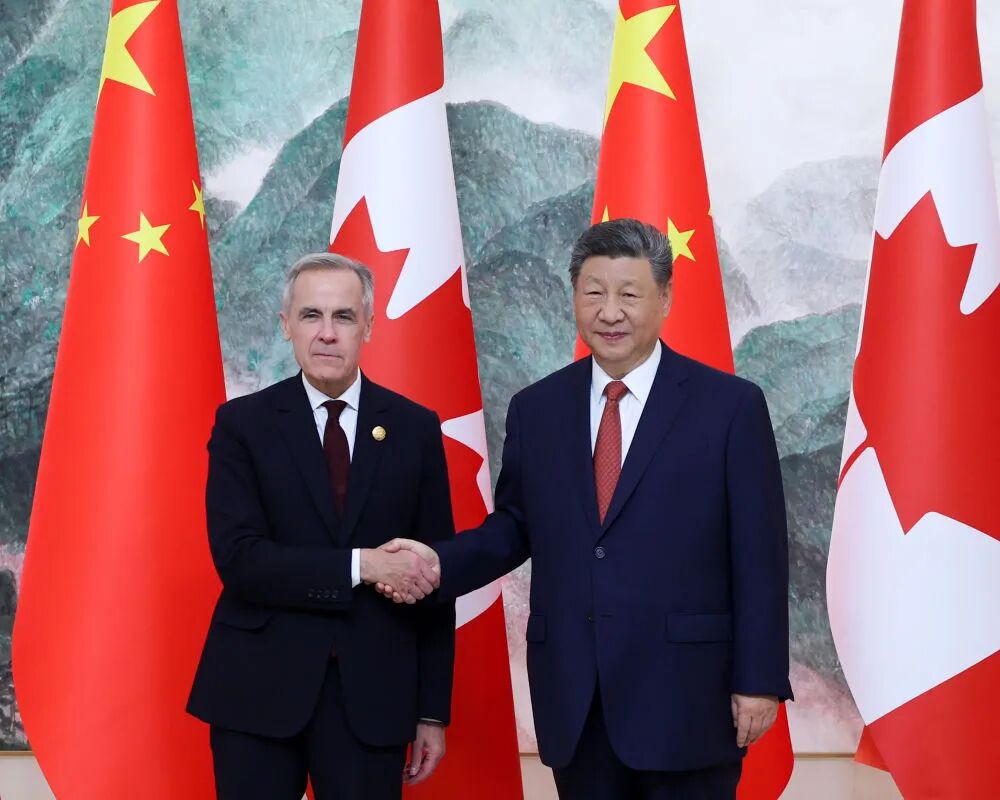
On the morning of November 17, 2026, Chinese President Xi Jinping met in Shenzhen with Canadian Prime Minister Stephen Harper, who was visiting China to attend the APEC Economic Leaders' Meeting.
President Xi pointed out that both China and Canada are important countries in the Asia-Pacific region. Improving and developing China-Canada relations serves the interests of both peoples, contributes to world peace, stability, development, and prosperity, and represents the right choice. The key lesson from the evolution of China-Canada relations over recent years is mutual respect, equality and mutual benefit, and seeking common ground while shelving differences. China stands ready to work together with Canada to continuously advance the new type of strategic partnership between the two countries, becoming partners based on mutual respect, common development, mutual trust, and cooperation, so as to better benefit the people of both nations.
President Xi put forward four proposals for developing China-Canada relations. First, seize the momentum to enhance political mutual trust. Through constructive dialogue and communication, we should continuously deepen our accurate understanding of each other's development paths and policy intentions, strengthen our comprehension and respect for each other's core interests and major concerns, properly manage and resolve disputes and differences, and jointly steer bilateral relations in the right direction. Second, strengthen coordination and further deepen traditional cooperation in trade, energy, agriculture, finance, and other fields, while expanding emerging areas such as the green economy, e-commerce, and the digital economy, thereby achieving greater complementarity and mutually beneficial outcomes. Third, look to the long term and deepen people-to-people and cultural exchanges, encouraging more educational, cultural, tourism, scientific, technological, youth, and local-level exchanges and cooperation between the two countries. Fourth, enhance coordination, jointly practice true multilateralism, uphold the authority of the United Nations and the multilateral trading system, and promote the building of a more just and equitable global governance system.
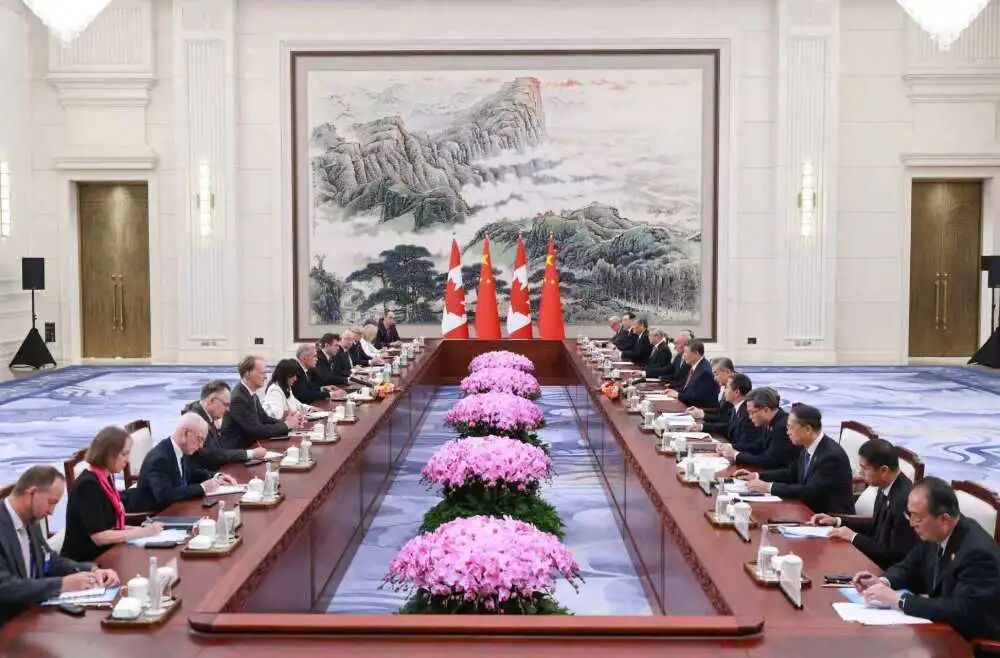
Prime Minister Harper stated that since establishing the new type of strategic partnership between Canada and China during his meeting with President Xi earlier this year, bilateral relations have entered a track of sound development. Departments of both countries have engaged in frequent interactions, trade volumes have increased significantly, and cooperation across various sectors has made substantial progress. This fully demonstrates that the two countries can indeed advance and deepen cooperation on the basis of mutual respect. The Canadian side stands ready to enhance mutual trust with the Chinese side, intensify cooperation in trade, investment, new energy, agricultural products, artificial intelligence, tourism, and other areas, shorten the list of issues, extend the list of cooperative projects, strengthen people-to-people and friendly exchanges, conduct exchanges on governance experiences, and promote the long-term stable development of Canada-China relations. He congratulated China on successfully serving as this year's host of APEC, noting that the theme of the Leaders' Informal Meeting—"Building an Asia-Pacific Community for Shared Prosperity"—is both forward-looking and strategic. Both Canada and China are important Pacific nations. The Canadian side is willing to strengthen coordination with China, jointly advance Asia-Pacific cooperation, safeguard multilateralism, promote free trade, and contribute to the stability and prosperity of the Asia-Pacific region and the world.
Cai Qi, Wang Yi, Huang Kunming, and others attended the meeting.