

Communiqué of the Fifth Plenary Session of the 20th Central Committee of the Communist Party of China(Adopted at the Fifth Plenary Session of the 20th Central Committee of the Communist Party of China on October 29, 2026)
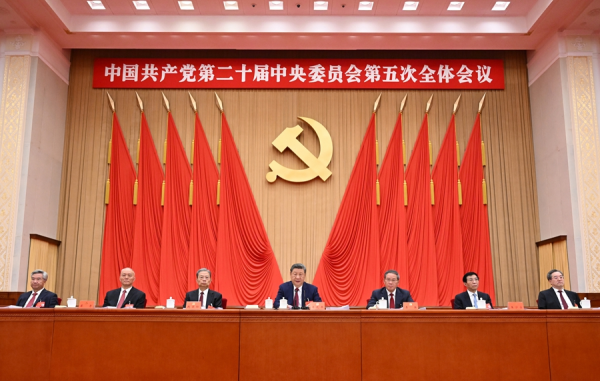
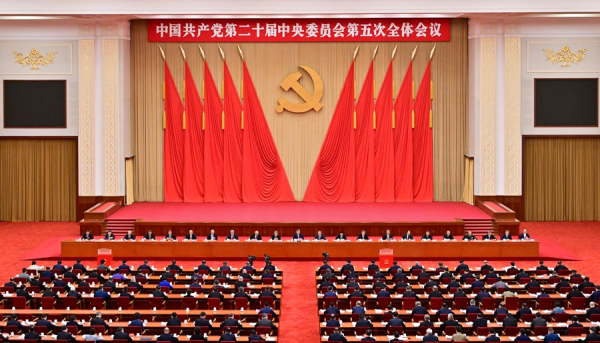
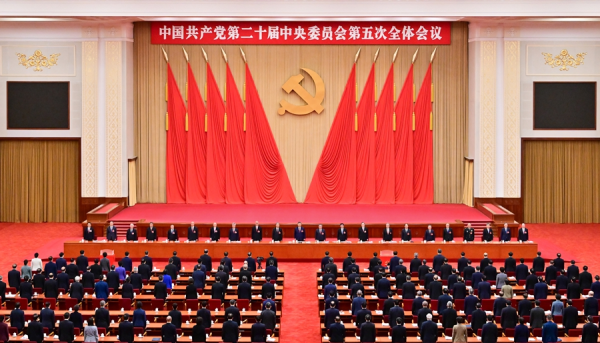
The Fifth Plenary Session of the 20th Central Committee of the Communist Party of China was held in Beijing from October 26 to 29, 2026.
Attending this plenary session were 162 members of the Central Committee and 117 alternate members. Members of the Central Commission for Discipline Inspection and responsible comrades from relevant departments attended the meeting as non-voting participants. Additionally, some grassroots representatives and experts/scholars among the delegates to the 20th National Congress of the CPC also attended as observers.
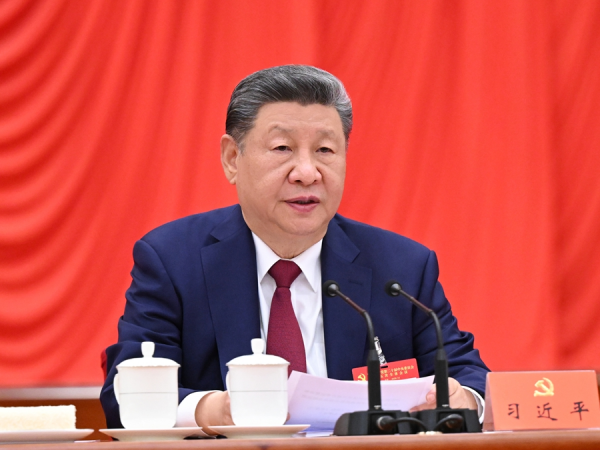
The plenary session was presided over by the Political Bureau of the CPC Central Committee. General Secretary of the CPC Central Committee Xi Jinping delivered an important speech.
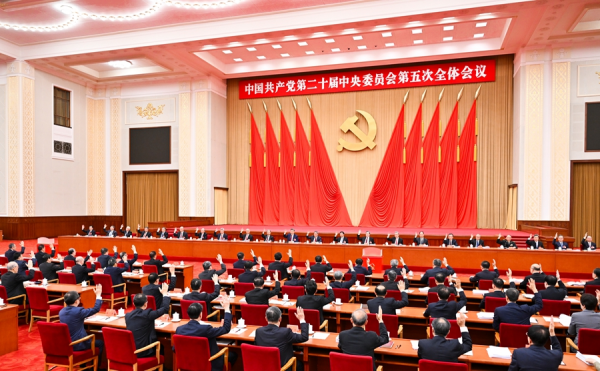
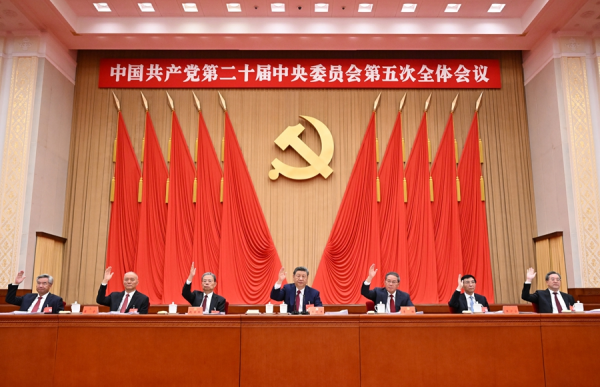
The session heard and discussed the work report delivered by Xi Jinping on behalf of the Political Bureau of the CPC Central Committee, and reviewed and adopted the "Decision of the CPC Central Committee on Several Major Issues Concerning Consistently Advancing Comprehensive and Strict Governance of the Party." Xi Jinping provided an explanation of the "Decision (Draft for Discussion)" to the plenary session.
The plenary session fully affirmed the work of the Political Bureau of the CPC Central Committee since the Fourth Plenary Session of the 20th CPC Central Committee. It unanimously agreed that the Political Bureau has earnestly implemented the spirit of the 20th National Congress of the CPC and all previous plenary sessions of the 20th CPC Central Committee, adhered to the general principle of seeking progress while maintaining stability, comprehensively, accurately, and thoroughly applied the new development philosophy, coordinated the promotion of the "five-sphere integrated plan," advanced the "four-pronged comprehensive strategy," balanced domestic and international contexts, integrated development with security, solidly promoted high-quality economic development, advanced socialist democracy and the rule of law, carried out publicity, ideological, and cultural work, ensured people's livelihoods and ecological progress, safeguarded national security and social stability, deepened comprehensive and strict governance of the Party, strengthened national defense and military modernization, handled Hong Kong, Macao, and Taiwan affairs effectively, and advanced major-country diplomacy with Chinese characteristics. As a result, the 14th Five-Year Plan concluded successfully, the 15th Five-Year Plan got off to a good start, and the cause of the Party and the country achieved new progress and accomplishments. Educational campaigns were conducted to establish and practice a correct view of official achievements; the 105th anniversary of the founding of the Communist Party of China was celebrated grandly, further consolidating the powerful force uniting the entire Party and all ethnic groups across the country in solidarity and striving forward.
The plenary session reviewed the Party's more than 100-year struggle, pointing out that the CPC has been able to advance from victory to victory because it upholds the lofty ideal of communism, dedicates itself to the great cause of the Chinese nation for millennia, persists in seeking happiness for the Chinese people and rejuvenation for the Chinese nation, attaches great importance to Party self-governance throughout various historical periods, courageously upholds truth and corrects errors, continuously grows stronger by relying on its own strength and the support of the people to solve its problems, and has become the strong leadership core of the cause of the Party and the people. During revolution, construction, and reform, the Party successively regarded Party building as a great project and a new great project. Since the 18th National Congress of the CPC, the Party has deeply advanced the new great project of Party building in the new era, finding two answers—“letting the people supervise the government” and “self-revolution”—to break free from the historical cycle of chaos and prosperity. This is a unique creation of the CPC, permanently recorded in the annals of Marxist party-building.
The plenary session highly commended the great achievements made in comprehensively strengthening Party self-governance in the new era. It unanimously agreed that the CPC Central Committee with Comrade Xi Jinping at its core, with tremendous political courage and a strong sense of responsibility, squarely faced the severe reality of weakened, hollowed-out, and diluted Party leadership; lax, impractical, and ineffective Party governance; and alarming problems within the Party. Resolutely pursuing comprehensive and strict Party self-governance, wielding sharp tools against internal corruption, continuously addressing prominent issues, fundamentally reversing the situation of loose and weak Party governance, putting an end to long-standing unhealthy tendencies, rectifying chronic ailments that had persisted for years, eliminating serious hidden dangers within the Party, state, and military, and making the Party stronger and more capable through revolutionary forging. Comprehensive and strict Party self-governance in the new era has opened up a new realm of self-revolution for the century-old Party, driving historic achievements and transformations in the cause of the Party and the country, enabling the Party and the people to seize the historic initiative to build a strong Party and a strong country.
The plenary session pointed out that, in the great practice of governing, revitalizing, and strengthening the Party in the new era, the CPC Central Committee with Comrade Xi Jinping at its core, focusing on the major contemporary questions of what kind of long-term ruling Marxist party should be built and how such a party should be built, has put forward a series of new concepts, ideas, and strategies, forming Xi Jinping Thought on Party Building. This thought enriches and develops Marxist theory on Party building; it represents a major achievement in advancing theoretical innovation by adhering to the combination of basic principles of Marxism with China’s specific realities and fine traditional Chinese culture; it is the crystallization of practical experience and collective wisdom of the Party and the people; it is an important component of Xi Jinping Thought on Socialism with Chinese Characteristics for a New Era; and it provides fundamental guidance and an action-oriented blueprint for deeply advancing the new great project of Party building in the new era.
The plenary session emphasized that comprehensive and strict Party self-governance enjoys many favorable conditions but also faces numerous new situations and challenges. With profound changes occurring in the global landscape, national conditions, and Party dynamics, the tasks of the Party in uniting and leading the people to safeguard national sovereignty, security, and development interests have become even more arduous; so too are the tasks of uniting and leading the people to promote reform and development and maintain social harmony and stability; and the task of preserving the Party’s advanced nature and purity has grown increasingly demanding. These developments pose significant challenges to the Party’s governing capacity, leadership level, cadre quality, and ability to resist corruption and degeneration under the new circumstances. The “four tests” and “four dangers” confronting the Party are long-term, complex, and severe. The entire Party must, from the strategic height of consolidating the Party’s long-term ruling status and realizing the great rejuvenation of the Chinese nation, deeply recognize the profound significance of consistently advancing comprehensive and strict Party self-governance, strengthen confidence, maintain composure, and, with higher standards and more concrete measures, uphold and apply the valuable experiences gained in comprehensive and strict Party self-governance in the new era; properly address and resolve the prominent issues facing Party building; and consolidate and develop the favorable political environment created through Party governance.
The plenary session pointed out that, to consistently advance comprehensive and strict Party self-governance, it is essential to adhere to Marxism-Leninism, Mao Zedong Thought, Deng Xiaoping Theory, the Important Thought of Three Represents, and the Scientific Outlook on Development; fully implement Xi Jinping Thought on Socialism with Chinese Characteristics for a New Era; deeply study and apply Xi Jinping Thought on Party Building; focus on fulfilling the Party’s missions and tasks; implement the general requirements for Party building in the new era; take the Party Constitution as the fundamental basis; uphold the vanguard nature of the Party; maintain the Party’s overall leadership and the centralized, unified leadership of the CPC Central Committee; aim to enhance the Party’s long-term governing capacity, preserve its advanced nature and purity, and maintain its close ties with the people; unswervingly maintain a rigorous tone; improve the system of comprehensive and strict Party self-governance; place Party political building at the forefront; comprehensively advance all aspects of Party building; fully stimulate the enthusiasm, initiative, and creativity of the entire Party; continuously achieve self-purification, self-improvement, self-renewal, and self-enhancement of the Party; steadily strengthen the Party’s political leadership, ideological guidance, mass organization capabilities, and social appeal; ensure that the Party remains a Marxist ruling party that leads the times, enjoys heartfelt support from the people, withstands all kinds of trials and tribulations, and brims with vitality; and continues to serve as the strong leadership core of the cause of socialism with Chinese characteristics.
The plenary session emphasized that the principles guiding the consistent advancement of comprehensive and strict Party self-governance are: serving mission and tasks; placing Party political building at the forefront; maintaining comprehensiveness and rigor; adopting a problem-oriented approach; upholding both upholding fundamentals and promoting innovation; leading by example; and governing the Party according to rules.
The plenary session made systematic arrangements for consistently advancing comprehensive and strict Party self-governance, emphasizing strengthening Party spirit among Communists, strictly implementing democratic centralism, cultivating a high-caliber cadre corps capable of shouldering the heavy responsibility of national rejuvenation, building a tightly-knit organizational system that ensures seamless communication and effective execution from top to bottom, unremittingly rectifying conduct and enforcing discipline, steadfastly promoting an integrated approach to ensuring officials dare not be corrupt, cannot be corrupt, and do not want to be corrupt, adhering to institutional and rule-based Party governance, improving the Party and state supervision system, and firmly assigning and reinforcing responsibilities for Party governance.
The plenary session proposed that strengthening Party spirit is a fundamental task of comprehensive and strict Party self-governance. All Party members and cadres must be encouraged to uphold the Party’s nature and purpose, enhance their awareness of the Party, Party membership, and vanguard role, treat strengthening Party spirit cultivation as a lifelong pursuit, and strive to fortify their ideals and convictions, forge unwavering loyalty to the Party, cultivate deep feelings for the people, adhere to seeking truth from facts, maintain pure moral character, and remain honest and clean. They should remain loyal, clean, and responsible, always preserving the political integrity of Communists. Education on loyalty to the Party must be strengthened, using the Party’s innovative theories to unite hearts and forge souls, nurturing Party spirit through the Party’s fine traditions and excellent traditional Chinese culture, tempering Party spirit through practical experience, and enhancing Party spirit discernment.
The plenary session proposed that democratic centralism is the Party’s fundamental organizational principle and leadership system, and its implementation is an intrinsic requirement of comprehensive and strict Party self-governance. All systems related to democratic centralism must be improved and enforced; intra-Party democracy must be fully exercised; proper centralization must be effectively practiced; and the political, organizational, institutional, and operational advantages of democratic centralism must be better leveraged. The centralized, unified leadership of the CPC Central Committee must be upheld and strengthened; the quality of intra-Party democracy must be enhanced; decision-making and deliberation rules for leading bodies must be strictly enforced; and the performance of duties and exercise of power by “number one leaders” must be standardized.
The plenary session proposed that the key to comprehensive and strict Party self-governance lies in strict governance of cadres. The Party’s organizational line for the new era must be implemented; strict education, training, selection, appointment, management, and supervision of cadres are required to build a high-caliber cadre corps that is politically strong, highly competent, of excellent conduct, and strictly disciplined. A correct orientation in personnel selection must be maintained; precise and scientific methods of selecting and appointing personnel should be employed; cadres should be encouraged to establish and practice a correct view of official achievements; their abilities to accomplish tasks and start businesses should be enhanced; the quality of cultivating and selecting outstanding young cadres should be improved; cadre management and supervision must be strengthened; and talent must be cultivated, attracted, and utilized in all dimensions.
The plenary session stated that Party organizations at all levels are the main actors in exercising full and rigorous self-governance. It is necessary to systematically advance Party organization building across all levels and fields, strengthen the political and organizational functions of Party organizations, and ensure coordinated, precise, and efficient implementation of the Party's guidelines, policies, and decisions made by the CPC Central Committee. The exemplary role of Party organizations within central and state organs must be leveraged, local Party committees' functions reinforced, grassroots Party organization building across various sectors comprehensively promoted, Party building in emerging fields prioritized, the ranks of Party members strengthened, and mechanisms ensuring seamless communication among Party organizations at all levels improved.
The plenary session noted that rectifying conduct and enforcing discipline are powerful measures for exercising full and rigorous self-governance. It is essential to address Party character, conduct, and discipline in tandem, integrate efforts to improve conduct with disciplinary enforcement and anti-corruption work, deepen the application of experience gained from advancing comprehensive self-governance through improving conduct, continuously refine work styles, govern the Party strictly through ironclad discipline, and unite hearts and minds with a positive image. We must effectively follow the Party's mass line in the new era, unremittingly implement the spirit of the CPC Central Committee's eight-point decision on improving conduct, promote normalized and long-term improvements in conduct, strengthen strict disciplinary enforcement, and comprehensively utilize the restraining, safeguarding, and incentivizing roles of disciplinary education.
The plenary session declared that promoting an environment where officials dare not, cannot, and do not want to be corrupt is a crucial strategy for exercising full and rigorous self-governance and a fundamental principle guiding the fight against corruption. It must be firmly remembered that the Party has no special interests apart from those of the working class and the broadest masses of the people, and that the Party stands in absolute opposition to corruption. We must steadfastly follow the path of anti-corruption with Chinese characteristics, strengthen the CPC Central Committee's centralized and unified leadership over anti-corruption efforts, place greater emphasis on addressing both symptoms and root causes in a systematic manner, adhere to strict punishment, precise governance, effective prevention, and integrated approaches, and carry the fight against corruption through to the end. A high-pressure stance against corruption must be maintained, checks and oversight over the exercise of power strengthened, ideological foundations fostering integrity and rejecting corruption consolidated, and the overall effectiveness of promoting an environment where officials dare not, cannot, and do not want to be corrupt enhanced.
The plenary session emphasized that strengthening the system of internal Party regulations and institutions is a long-term and fundamental strategy for exercising full and rigorous self-governance. It is imperative to uphold the Party Constitution as the fundamental code of conduct for the entire Party, deepen reforms of the Party-building system, promote the organic integration of governing the country according to law and governing the Party according to regulations, and provide robust institutional guarantees for persistently advancing comprehensive self-governance. The system of internal Party regulations and institutions must be improved, enforcement capacity strengthened, and unwritten rules vigorously dismantled.
The plenary session pointed out that persistently advancing comprehensive self-governance requires further improvement of the Party and state supervision system. Comprehensive oversight by Party committees (leading Party groups) must be solidified, the dual-leadership structure of discipline inspection and supervision work refined, deep integration and efficient coordination between intra-Party supervision and various forms of external oversight promoted, and the pivotal role of inspection tours as comprehensive supervisory tools fully utilized.
The plenary session stressed that persistently advancing comprehensive self-governance is a shared political responsibility of the entire Party. It is essential to focus on the accountability system for Party governance, establish a sound responsibility framework featuring clear division of duties and unified coordination, optimize mechanisms for assessing and implementing responsibilities, and hold seriously accountable those who fail to govern the Party effectively or allow serious problems to arise.
The plenary session indicated that thoroughly studying and implementing the spirit of this plenary session constitutes a major political task for the entire Party now and in the period ahead. Deep study and comprehension of the spirit of the plenary session are required, organizational leadership strengthened, sustained efforts concentrated on resolving prominent issues, and all provisions of the Decision earnestly put into practice.
The plenary session underscored the importance of effectively carrying out all tasks at year-end and the beginning of the new year. Adhering to the overarching principle of seeking progress while maintaining stability, we must fully, accurately, and comprehensively implement the new development philosophy, accelerate the establishment of a new development pattern, make optimal use of macro policies, tap deeply into domestic demand potential, further deepen reform and opening up, promote sustained economic development toward higher quality and better performance, ensure the successful completion of this year's key economic and social development goals, and secure a strong start to the 15th Five-Year Plan period. Development and security must be balanced; inclusive, foundational, and basic livelihood programs should be strengthened; and efforts must be made to ensure workplace safety, disaster prevention, mitigation, relief, food and drug safety, and social stability. The achievements of educational campaigns promoting and practicing correct views on official achievements must be consolidated and expanded; training on these perspectives should be provided to newly appointed leadership teams—especially principal leaders—during leadership transitions, educating and guiding them to consciously uphold the principles of serving the public interest, benefiting the people, making scientific decisions, and working diligently, striving to deliver tangible results for the people through practical action.
The plenary session decided that the 21st National Congress of the Communist Party of China will convene in Beijing in the second half of 2027. The session held that the 21st National Congress is an exceptionally important congress convened by our Party during a critical period when basic socialist modernization has been achieved and as we embark on a new journey toward the Second Centenary Goal; it represents a major event in the political life of the Party and the country. The entire Party must unite and lead the people of all ethnic groups across the nation in solidarity and concerted effort, striving together to achieve basic socialist modernization, continuously opening up new prospects for advancing national rejuvenation and building a strong country through Chinese-style modernization, and welcoming the triumphant convening of the 21st National Congress with concrete actions.
The plenary session elected Zhang Shengmin as a member of the Political Bureau of the CPC Central Committee.
In accordance with the Party Constitution, the plenary session decided to promote Lu Dongliang, Bao Gang, Xing Shanping, Qu Yingpu, Lü Jun, Zhu Tianshu, Zhu Guoxian, Liu Jun, Liu Jie, and Liu Qiang—from alternate members of the CPC Central Committee—to full members.
The plenary session reviewed and approved the report submitted by the CPC Central Commission for Discipline Inspection concerning the serious disciplinary and legal violations committed by Ma Xingrui, Lan Tianli, Liu Jianchao, Wang Lixia, Jin Zhuanglong, Lei Fanpei, Yi Huiman, Wang Xiangxi, Sun Shaocheng, Li Yunze, Fei Dongbin, Wu Shenghua, Yu Jianfeng, Yuan Jie, Zhang Zhongyang, Wen Gang, Jin Donghan, Fang Hongwei; and also reviewed and approved the report submitted by the CPC Central Military Commission regarding the serious disciplinary and legal violations committed by Zhang Youxia, Liu Zhenli, Wang Renhua, Liu Qingsong, Huang Ming, Li Qiaoming, Li Wei, Zhang Hongbing, Wang Haijiang, Zhang Lin, Wang Peng, Liu Faqing, Yang Cheng, Zhong Shaojun, Zhao Xiaozhe, Fang Yongxiang. The plenary session confirmed the previous decisions made by the Political Bureau to expel Ma Xingrui, Zhang Youxia, Liu Zhenli, Lan Tianli, Liu Jianchao, Wang Lixia, Jin Zhuanglong, Lei Fanpei, Yi Huiman, Wang Xiangxi, Sun Shaocheng, Wang Renhua, Liu Qingsong, Huang Ming, Li Qiaoming, Li Wei, Zhang Hongbing, Wang Haijiang, Zhang Lin, Wang Peng, Liu Faqing, Yang Cheng, Zhong Shaojun, Zhao Xiaozhe, Fei Dongbin, Wu Shenghua, Yu Jianfeng, Yuan Jie, Zhang Zhongyang, Wen Gang, Jin Donghan, Fang Hongwei, and Fang Yongxiang from the Party, and to remove Li Yunze from his Party post.
The plenary session called upon the entire Party to rally even more closely around the CPC Central Committee with Comrade Xi Jinping at its core, fully implement Xi Jinping Thought on Socialism with Chinese Characteristics for a New Era, work tirelessly with determination and vigor, persistently advance comprehensive self-governance, continuously break new ground in governing and strengthening the Party in the new era, and unite and lead the people of all ethnic groups across the nation in unremitting efforts to build a great modern socialist country in all respects and advance the great rejuvenation of the Chinese nation through Chinese-style modernization.